Sandboxes in space
“The dinosaurs are extinct because they didn’t have a space programme”
In 2022, NASA's Planetary Defense Coordination Office successfully struck the asteroid Dimorphos with DART, which changed its orbit (slightly) around the larger "parent" asteroid Didymos.1
Well, the humans are back! ESA sent Hera (like a high-tech insurance loss adjuster) to survey the damage. ESA shared the first close-up images on 25 November. Not a complete write-off, the asteroid can still fly, but it'll need a bit of work done to fill in that new impact crater.
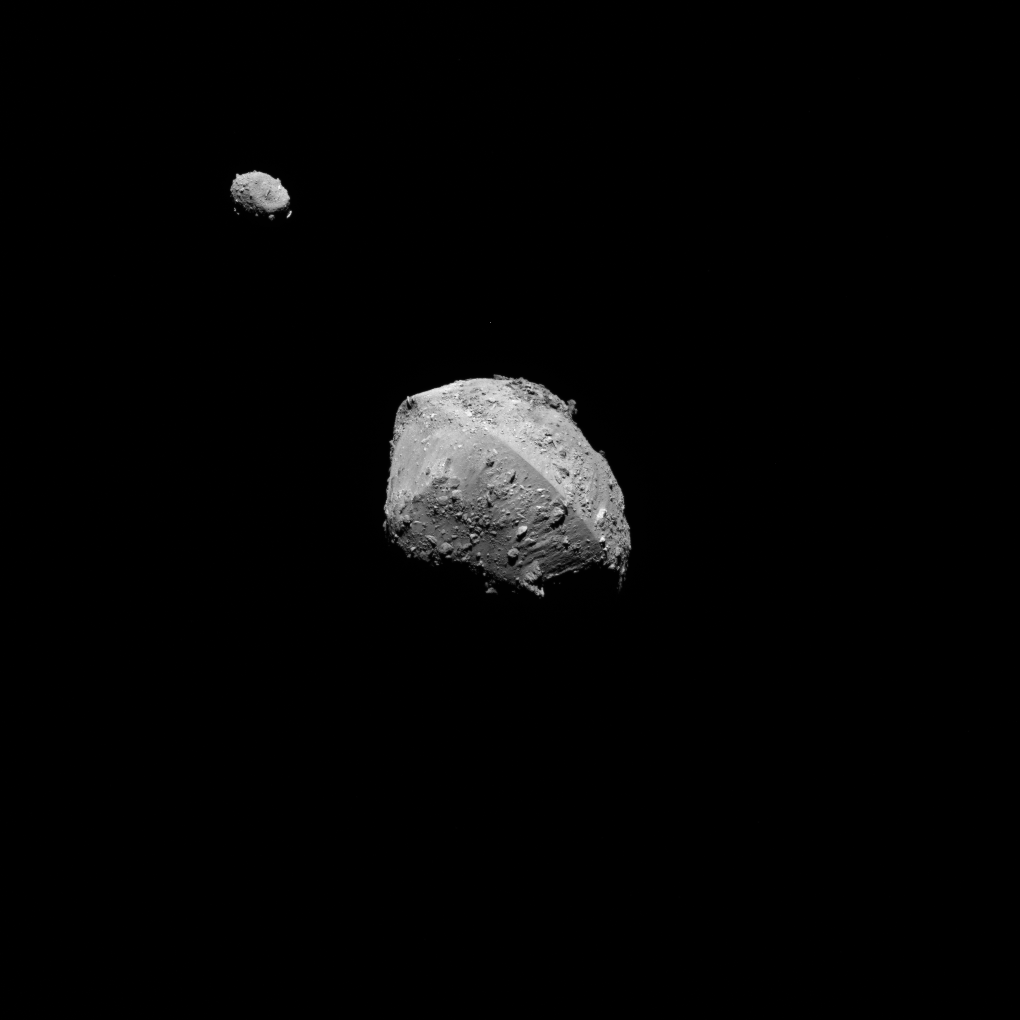
As important as a planetary defense mission is, it's not the only interesting activity planned. ESA will test a new capability by letting people run software in a sandbox on the spacecraft, alongside the flight software. Normally people want to carefully vet and own all the code that runs on their spacecraft, in case a poorly written or malicious payload does something unexpected.
Unfortunately, applications are closed to submit code but I suspect the ping time would put me off using it for much anyway. Still, being able to try something out without getting in the way of the software that's doing the actual flying seems like a pretty good advert for the concept of sandboxes.
Thomas Gazagnaire writes that you need three things to run someone else's code in space.
- Hardware-enforced isolation from the flight software.
- Signed updates in a standard format that can pick up where they left off between ground contacts.
- Limits on how much CPU, memory, storage and bandwidth each experiment can use.
See his post Is Running Untrusted Code on a Satellite a Good Idea?
I notice that:
- on my laptop, Docker Sandboxes give each agent its own microVM, isolated from each other and the host using hardware;
- signed OCI image digests identify and authenticate the specific software to run; and
- the VMM itself can limit I/O and impose quotas.
So... Docker Sandboxes in space anyone?
- Did you know that the NASA team used Docker to automate their spacecraft software tests? See the 2018 Cool Hacks talk at DockerCon. ↩